+43 1 218 44 40
Urgent · Copyright (music in social media)

Cease-and-desist letter for music in Reels, TikToks or YouTube Shorts?
Don't pay — get it checked first.

You've received a letter demanding that you license a sound recording — typically from SoundGuardian GmbH (Frankfurt am Main, usually represented by Mag. Paul Gursch in Vienna) or from B1 Recordings GmbH (Berlin, represented by IPPC LAW Rechtsanwaltsgesellschaft mbH)? The financial demands often range between €3,000 and €10,000 and are frequently inflated relative to the actual use. The key is to take the right approach — pay as little as possible while still keeping litigation risk as low as possible.

  • Fast on business days — within 24 hours
  • Hourly rate €380 net · typical total effort 2h

Recognised 2024 – 2026
  • TOP2026 DER STANDARD · Statista TOP Law Firm 2026 — Trademark & Unfair Competition Law
  • JUVE Ranking IP/IT 2025 — ranked: IP and copyright law JUVE Ranking IP/IT Ranked 2025 — IP, Trademark & Copyright Law
  • AI Awards 2024 — Leading Civil Litigation Lawyer of the Year, Austria AI Awards 2024 Leading Civil Litigation Lawyer of the Year — Austria

From the first call to a tailored strategy and solution

A cease-and-desist letter for music in a Reel often comes with short deadlines and can trigger significant cost risks. The enclosed cease-and-desist undertaking should never be signed unchecked. We keep the free initial assessment clearly separate from the further legal work — that only follows once you actually engage us after the initial conversation.

  1. 01

    Free initial assessment

    You call, we take time for a short general assessment — plausibility of the demand, rough range, urgency of action.

    The initial assessment is free and non-binding. Only afterwards do you decide whether to engage us for the further work.

  2. 02

    Document review & fact-finding

    After engagement you forward the cease-and-desist letter, a link to the Reel/video concerned and background on the publication (commercial? reach? duration?). On that basis we examine standing, the amount demanded and the strategic room for response.

  3. 03

    Strategy & cease-and-desist undertaking

    In most cases a modified cease-and-desist undertaking is the commercially smartest route. It eliminates the risk of repetition. In parallel we work out the best strategic response to the damages claim — tailored to your specific scope of use and your willingness to accept risk.

  4. 04

    Out-of-court resolution — court only if needed

    The goal is to resolve the matter quickly, cost-effectively and out of court. If the other side does take the matter to court contrary to expectations, we represent you with decades of litigation experience — from preliminary-injunction proceedings to main-stage proceedings, through all instances if needed.

Transparent fees — realistic outcomes

We don't make outcome promises — that would be dishonest. What we can tell you: from our experience with many cease-and-desist letters of this kind, the demands can usually be reduced significantly.

Fees

Hourly rate €380 net. Typical total effort for standard cease-and-desist letters: 2 hours. This includes analysing the matter against the actual use, jointly setting the strategy and explaining all steps and alternatives, plus the response to the other side including a cease-and-desist undertaking.

Range of demands

From our practice: licence demands typically range €3,000 – €10,000. These amounts are often inflated relative to the actual use — the right strategy is what matters.

Strategic goal

Pay as little as possible and minimise litigation risk. Which path gets us there — modified undertaking, waiting defence or targeted counter-argumentation — we decide together with you.

Commercial outcome

Our fee plus the amount you ultimately pay is typically noticeably below the original demand — particularly with low usage and higher starting demands.

Which platforms these cease-and-desist letters concern

These cease-and-desist letters hit freelancers, SMEs, online shops and restaurants alike — anywhere profiles are used with advertising intent (even merely supplementary).

Instagram Reels

Reels using music from the Instagram library — for business profiles or with any supplementary advertising intent, the library's licence does not cover the use. Even Reels deleted later are sometimes still pursued.

TikTok videos

TikTok videos with licence-restricted sound recordings — here too the platform's licence does not cover commercial or advertising use. Frequently affected: brand accounts and influencer collaborations.

Facebook stories & Reels

Facebook stories and Facebook Reels — the same underlying issue as on Instagram. Often a cease-and-desist letter only arrives weeks or months after publication.

YouTube Shorts

YouTube Shorts can also be affected if the music library is licensed only for non-commercial use and the channel has an advertising character.

Two specialised attorneys. One phone number.

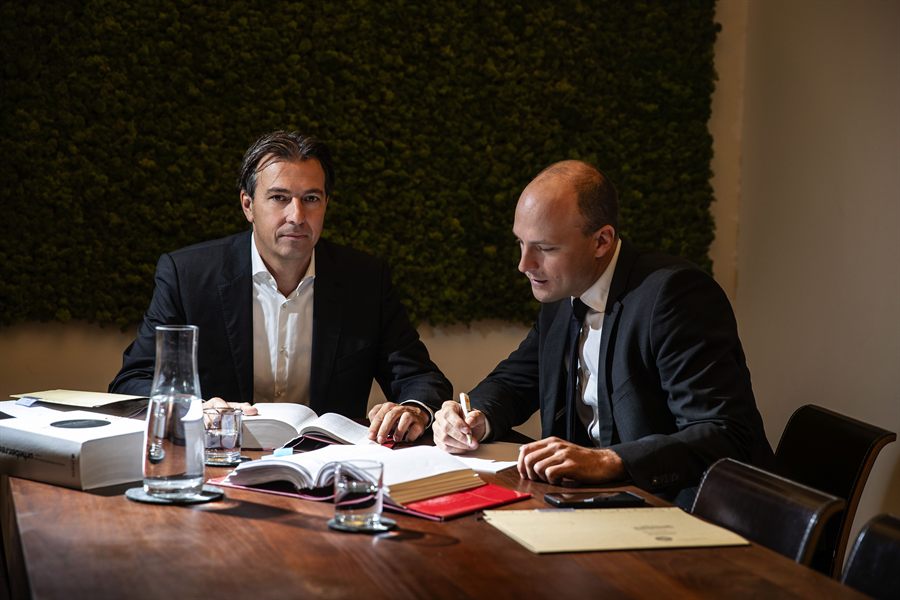
Dr. Bernhard Tonninger and Mag. Dr. Markus Albrecht working on a shared mandate
Your contacts

Dr. Bernhard Tonninger

Attorney-at-Law · Partner

Over two decades of practical copyright experience. Co-author of the Manz comprehensive commentary urheber.recht (3rd ed. 2023, sections 3, 73–75, 85 and 90 UrhG); regular annotations on Supreme Court decisions in ecolex and ÖBl. Regular representation in copyright matters out of court and in court.

Mag. Dr. Markus Albrecht

Attorney-at-Law · Partner

Partner with focus on trademark, unfair-competition and copyright law. Co-author of the Manz comprehensive commentary urheber.recht (3rd ed. 2023, sections 66–72 UrhG); regular contributions on copyright matters. Strong focus on copyright cease-and-desist letters, copyright contracts and questions around storage-media remuneration (SMV). Regular representation in copyright matters out of court and in court.

In day-to-day advisory work both partners are your contacts; in complex and larger proceedings we combine forces. Even during holiday periods, someone in the firm who knows your case is always reachable.

What clients want to know about music cease-and-desist letters

Who sends these cease-and-desist letters — and are the demands justified?
Currently two rights-holder constellations are particularly active: SoundGuardian GmbH (Frankfurt am Main), usually represented by the law firm Mag. Paul Gursch (Vienna), and B1 Recordings GmbH (Berlin), usually represented by IPPC LAW Rechtsanwaltsgesellschaft mbH (Berlin). Both systematically pursue unlicensed uses of specific sound recordings in social-media videos — the amounts differ, the mechanism is essentially the same. Whether a particular demand is justified depends on the actual chain of rights, the type of use and the amount of the licence claimed — we examine all three at the start of the engagement.
Doesn't the music library on Instagram, TikTok or Facebook cover this?
The platforms' music libraries expressly cover only personal, non-commercial use. As soon as a Reel or video appears in an advertising, commercial or corporate context, the licence coverage can fall away — including for seemingly innocuous business profiles, restaurants, online shops or freelancers. Rights holders systematically pursue exactly this gap.
How large are the typical amounts demanded?
From our practice: licence demands typically range between €3,000 and €10,000, depending on the rights holder, the reach, the publication duration and the type of use. B1 Recordings demands tend to be at the lower end of the range, SoundGuardian demands closer to the middle. These amounts are often inflated relative to the actual use. Response deadlines of 10–14 days are common.
What does a consultation with Tonninger Schermaier & Partner cost?
A short general initial assessment by phone is free of charge. For the actual case-handling we usually agree a flat fee based on our hourly rate of €380 net per hour. With a typical total effort of 2 hours, that flat fee comes to around €760 net. It covers analysing the matter against the actual use, jointly setting the strategy and explaining all steps and alternatives, plus the response to the other side including a cease-and-desist undertaking.
Should I just pay to make it go away?
Please don't pay without checking. The demanded amounts are often significantly inflated — especially with low reach, short publication duration, questionable chain of rights or with amounts at the upper end of the typical range. With the right strategy the economic impact can usually be reduced significantly. In our experience, paying without checking almost always means overpaying.
What is a modified cease-and-desist undertaking?
A binding promise to refrain from the challenged conduct in the future — here: the unlicensed use of the sound recording — backed by an appropriate penalty for breach. We draft it so that it only captures the conduct actually challenged and does not restrict your entire marketing practice. With a binding undertaking the risk of repetition is normally eliminated. The question of the amount of damages is then resolved strategically — depending on the actual scope of use and your willingness to accept risk.
What happens if I don't respond or respond too late?
The other side can file a claim at the competent commercial court, often combined with a motion for a preliminary injunction. You then face not only the original demand but also your own and the other side's lawyer and court costs — the total bill quickly exceeds what an early settlement would have cost. That's exactly what we want to prevent.
What are my chances of getting the amount reduced?
In our long-standing practice the economic impact can be significantly reduced in most cases — how far depends on the actual scope of use, the sender's standing and your willingness to accept risk.

Deadline approaching?

Pick up the phone — we discuss your options immediately. A first assessment costs nothing.